
Sustainable Development at AGDUC

The healthcare sector has a significant carbon footprint. Dialysis is no exception. Patient transport, waste disposal, high water and electricity consumption… dialysis involves numerous energy-intensive processes. 

How can we maintain the quality of care for patients and caregivers while reducing our carbon footprint? We’ve found some answers.
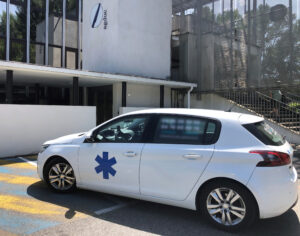
Transport

In the field of dialysis, patient transport is both a critical and routine issue. At AGDUC, one solution seems ideal: shared transport.

Water

Water is a vital resource for patients and is used in large quantities in the dialysis sector. That is why we reuse a portion of this resource.

Electricity

To make the most of the buildings owned by AGDUC, solar panels have been installed on the roofs to help ensure their proper operation.

Green Team

AGDUC is strengthening its commitment by launching a group of volunteers dedicated to implementing concrete environmental actions.

Optimizing patient transport

In the field of dialysis, patient transportation is a critical and daily challenge. Three times a week, patients must travel to their treatment center for sessions lasting several hours. These regular trips place a significant logistical burden on the healthcare system, both in human and economic terms. It is in this context that the development of ride-sharing makes perfect sense, both as lever for resource optimization and as environmentally responsible action.

Shared transportation is a key component of the organization of dialysis care. It allows multiple patients to be transported in a single vehicle, when their schedules allow. This mode of transportation reduces the number of trips back and forth, reduces the carbon footprint, relieves pressure on emergency medical services and helps to better control of spending health. It also strengthens the social connection among patients and can improve the patient experience.

For example, in the Isère department, one in three AGDUC trips is carpooled: :

• At the La Tronche site, the share of shared transportation rose from 24% in 2023 to 34% in 2024
• In Voiron, the rate tripled, rising from 7% to 22%
• In Meylan, it doubled, rising from 20% to 41%

These results reflect the commitment of AGDUC, its teams, and its transportation partners to promoting a more collaborative, supportive, and sustainable approach to patient transportation.

AGDUC will continue this momentum in the coming months, with the goal of consolidating these gains and further expanding the use of carpooling at all of its locations.
Using the large-scale water supply at AGDUC

Water is an essential component of any dialysis treatment, regardless of the method used. It is considered a medication and accounts for 97% of the fluid used to clean the patient’s blood. Before being used in dialysis machines, the water undergoes several treatment steps to make it as pure as possible, in order to prevent any adverse reactions.
The main purification step involves passing the water through a reverse osmosis system, which removes 99% of the bacteria, viruses, and minerals that are undesirable for dialysis. Unfortunately, this step is energy-intensive and uses a lot of water. In fact, some of the water entering the osmosis membrane is discharged, carrying unwanted waste with it. This water, which is discharged into the sewer, amounts to between 50 and 100 liters per session per patient.

To avoid wasting this wastewater, which cannot be used in the sewer system, AGDUC has decided to use it to maintain its green spaces at several sites, such as in Aubenas and Romans-sur-Isère. The results speak for themselves: no plant loss in the first year, spectacular growth of trees and hedges, and a cooler environment around the building in the summer thanks to nighttime watering.
In addition, unused wastewater seeps into the ground and helps replenish groundwater supplies.
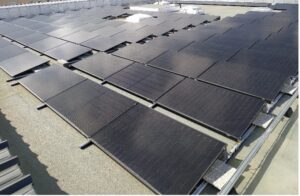
Install solar panels on the roofs of buildings

In order to make the best use of the buildings owned by AGDUC, solar panels have been installed on the building’s roof. During the week, they help supply water to the entire building. On Sundays, when no patients are undergoing dialysis, they are used to disinfect the membranes that purify the water—a vital treatment for the patients. 

A display inside the building shows the current power output, today’s production, cumulative production, and the amount of CO2 saved.

The installation of solar panels is underway at various AGDUC sites, including Aubenas, Voiron, Valence, and Romans-sur-Isère. A study is also currently underway in Montélimar.

The Green Team: AGDUC’s new asset

Committed to ensuring the long-term success of its efforts, AGDUC is strengthening its commitment to sustainable development with the creation of the Green Team. This group, made up of volunteer staff members, will be tasked with brainstorming, proposing, and communicating concrete actions addressing major environmental issues : water management, waste sorting and reduction, energy efficiency, transportation, and digital technology.

The idea is to enable everyone, in their own way, to help shape our practices and bring new ideas to the table through a collaborative approach.

Since AGDUC operates in several cities across multiple departments, the goal is to form a cross-site team with one representative per site or geographic area. Each member of the Green Team will contribute to the collective discussion while also serving as a source of ideas in their own area.