
Kidney failure

When the kidneys do not function as well as they should, this is referred to as kidney failure. The kidneys are no longer able to effectively filter and remove waste products from the blood. There are different stages, ranging from mild kidney failure to end-stage kidney failure.

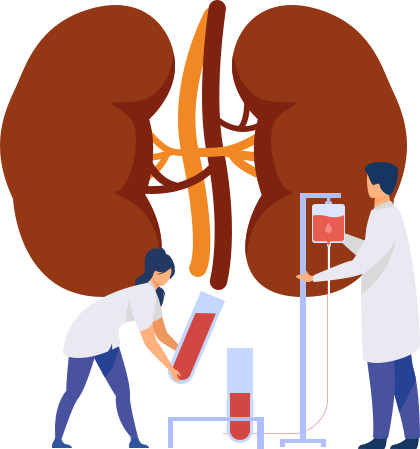
What do our kidneys do?

Their primary functions are to filter the blood, purify it, produce urine, and produce and regulate substances essential to our bodies. They remove waste products from the blood that result from the breakdown of the body’s cells and the digestion of food. Our kidneys filter 180 liters of blood every day.
Organic waste products (excess water and salt, urea, etc.) are excreted in the form of urine (between 1.5 and 2 liters per day). The kidneys also play a vital role in regulating blood pressure and producing certain hormones.

Warning signs

Kidney failure is not easy to diagnose and is often asymptomatic in its early stages. Here are some signs to look out for:
Excessive fatigue.
Loss of appetite.
Frequent urge to urinate (especially at night).
High blood pressure (hypertension).
Nausea.
Swelling in the legs (edema)…
To assess your chronic kidney disease, you will need to either have a urine test to check for protein or a blood test to determine whether your urea and creatinine levels are above normal.


Prevention of Chronic Kidney Disease

Kidney disease can be managed and stabilized, which is why prevention is key. Seeing a nephrologist for an early diagnosis is essential. Our multidisciplinary teams (coordinating nurses, dietitians, psychologists, and social workers) can then help you make the necessary changes to prevent or slow the progression of the disease.
You may be advised to make lifestyle changes, such as limiting your salt intake, engaging in physical activity, taking medication, treating anemia, managing diabetes, and controlling your blood pressure.

Treatment options for chronic kidney disease

There are various treatment options for chronic kidney disease. The choice is made by the patient, in consultation with their nephrologist and the care team, taking into account the patient’s preferences and health status to preserve their independence as much as possible.